
Are you suddenly facing the frustration of your car overheating without warning? It’s an annoying situation that can leave you feeling stranded and concerned about your vehicle’s health.
The sudden occurrence of car overheating can be puzzling and alarming, especially when you least expect it.
We outline the potential causes behind why your car overheats suddenly and how to address the problem effectively.
Why Your Car Suddenly Overheats
A car suddenly overheats when the cooling system can no longer remove heat from the engine fast enough. This may happen because of a coolant leak, a stuck thermostat, a failing water pump, a broken radiator fan, a clogged radiator, or a damaged head gasket.
A faulty radiator cap or a broken drive belt can also cause the engine temperature to rise rapidly. If the temperature gauge enters the red zone, pull over safely, switch off the engine, and let it cool completely before checking anything.
Never open the radiator cap while the engine is hot, as pressurized coolant can cause severe burns.
Warning Signs Your Car Is Overheating
Common warning signs indicate that your engine is getting hotter than its normal operating temperature. Watch for the following symptoms:
- Temperature gauge rising into the red zone: The dashboard temperature gauge moves above its normal range, indicating that the engine is overheating.
- Temperature warning light: A red thermometer symbol or engine temperature warning appears on the dashboard.
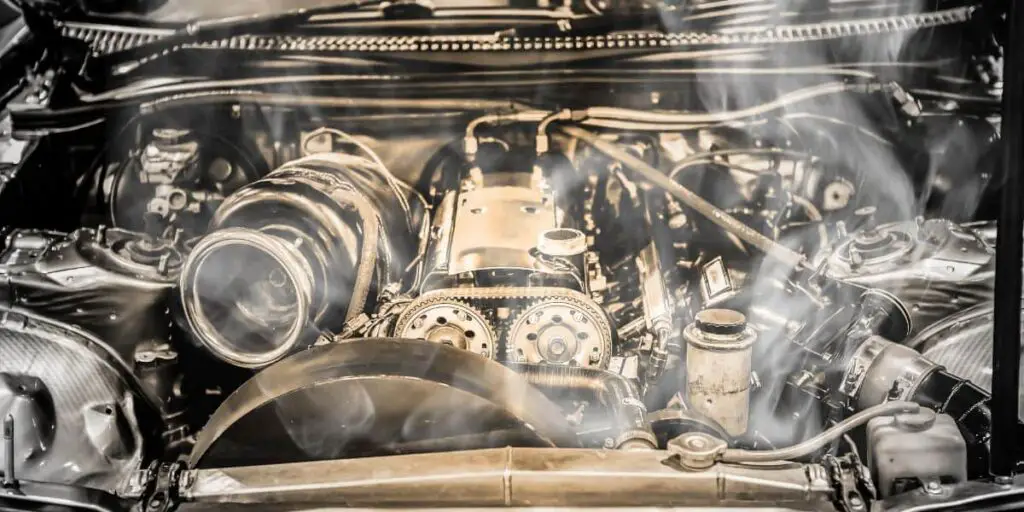
- Steam coming from under the hood: White steam or vapor may escape from the engine compartment when coolant boils or leaks onto hot engine components.
- Coolant leaking beneath the car: Green, pink, orange, or other colored fluid may appear under the vehicle, depending on the coolant type.
- Unusual smells: A sweet smell may indicate leaking coolant, while a burning odor can suggest overheated engine components.
- Loss of engine power: The engine may feel weak, hesitate, or struggle to accelerate as its temperature rises.
- Air conditioner blowing warm air: The AC may stop cooling properly when the engine overheats or the cooling system develops a fault.
- Engine knocking or unusual noises: Excessive engine heat can cause abnormal combustion, knocking, or other unusual sounds.
What to Do Immediately (Safety First)
If your car suddenly overheats, follow these steps to protect yourself and prevent serious engine damage.
1. Turn off the air conditioner. Switch off the AC to reduce the load on the engine. If it is safe and the temperature has only started rising, turning the cabin heater to maximum heat may temporarily help remove some engine heat while you find a safe place to stop.
2. Pull over safely. Find a safe stopping place away from moving traffic. If the temperature gauge reaches the red zone, steam appears, or you notice a sudden loss of power, stop as soon as it is safe to do so.
3. Switch off the engine. Turn off the ignition once you have stopped safely. Do not continue driving in an attempt to reach your destination, as overheating can damage the cylinder head, head gasket, or engine.
4. Exit the vehicle if necessary. If you see heavy steam, smell burning, or suspect a fire, move to a safe location away from the vehicle and traffic. Call emergency services if there is a fire.
5. Allow the engine to cool completely. Wait at least 30 minutes, or longer if necessary. Do not open the radiator cap or coolant reservoir cap while the system is hot because pressurized coolant can spray out and cause severe burns.
6. Check the coolant level and look for leaks. Once the engine is completely cool, check the coolant reservoir and look for visible leaks beneath the car. Do not touch hot engine components or moving parts. If the coolant is very low, a leak is visible, or steam continues to appear, arrange professional assistance rather than restarting the engine.
7. Call for roadside assistance if the cause is unclear. If the engine overheated severely, the coolant is leaking, or the temperature rises again, have the car towed to a mechanic. Driving with a cooling-system fault can turn a relatively minor repair into expensive engine damage.
Common Causes of Sudden Overheating
Here’s why a car overheats all of a sudden:
1. Coolant leaks
Coolant leaks can trigger sudden and unexpected car overheating due to a rapid loss of coolant, disrupting the engine’s cooling system.
Coolant, also known as antifreeze, plays a crucial role in absorbing heat from the engine and maintaining an optimal temperature.
When a leak occurs, the coolant level drops significantly, impeding the engine’s ability to regulate its temperature, ultimately resulting in overheating.
This is how coolant leaks lead to sudden overheating:
Reduced coolant levels: A sudden and substantial loss of coolant from a leak in the radiator, hoses, water pump, or gasket can rapidly decrease the fluid level.
With less coolant circulating, there’s insufficient heat dissipation, leading to overheating.
Impaired heat dissipation: Coolant leaks can compromise the cooling system’s ability to absorb heat from the engine.
When the coolant level drops below a critical point, the engine loses its ability to regulate temperature effectively, causing sudden overheating.
Signs of coolant leaks:
- Visible puddles under the car as signs of a coolant leak as bright-colored (often green, orange, or pink) puddles after it’s been parked.
- A distinct sweet smell inside or outside the car, often compared to maple syrup, can indicate a coolant leak.
- Sudden or persistent overheating without a clear cause.
- A visible leak or steam coming from the engine bay, especially while the engine is running or shortly after turning it off.
- Low coolant warning light
- White smoke from exhaust indicates a coolant leak into the combustion chamber due to the burning coolant.
Solution:
To diagnose the problem, inspect the cooling system and seek professional help.
Repairs might involve fixing damaged hoses, replacing gaskets, or repairing the radiator to ensure the proper functioning of the cooling system and prevent overheating issues.
Related: Car overheating with coolant (Explained)
2. Faulty thermostat
A car that overheats suddenly can be caused by a faulty thermostat.
The thermostat plays a crucial role in regulating the engine’s temperature by controlling the flow of coolant through the engine.
When the thermostat malfunctions, it can disrupt this process and lead to sudden overheating.
This is how a faulty thermostat leads to sudden overheating:
Stuck closed: If the thermostat remains closed, it blocks the flow of coolant from the engine to the radiator.
As a result, the coolant won’t circulate to dissipate heat, causing the engine temperature to rise excessively.
Improper regulation: A malfunctioning thermostat may get stuck partially open or closed, leading to inconsistent coolant flow.
This inconsistency can result in erratic temperature fluctuations, sometimes causing overheating.
Signs of a faulty thermostat:
- High engine temperature
- Cold or inconsistent heater
- Rapid temperature fluctuations.
- Coolant Leaks.
- Engine overheating.
- Slow warming up of the engine.
Solution:
Fixing a faulty thermostat involves replacing the thermostat unit.
Seek the expertise of a qualified mechanic to inspect and, if necessary, replace it to prevent further overheating and potential engine damage.
Related: Car overheating after replacing radiator (Explained)
3. Radiator issues
A car that overheats suddenly can also be caused by radiator issues.
The radiator plays a crucial role in cooling the engine by dissipating heat from the coolant. Any problems with the radiator that hinder its ability to perform this function can lead to sudden overheating.
Here’s how radiator issues lead to sudden overheating:
Clogging: Over time, the radiator can accumulate debris, sediment, or mineral deposits that restrict the flow of coolant through its fins.
This impedes the heat exchange process, reducing the radiator’s efficiency in cooling the coolant.
Damage or Leaks: Physical damage to the radiator, such as cracks or leaks, can cause coolant to escape.
A decrease in the coolant level compromises the radiator’s ability to effectively cool the engine, leading to overheating.
Faulty Radiator Cap: A malfunctioning radiator cap can result in a loss of pressure within the cooling system, which may lead to decreased coolant circulation and subsequent overheating.
Signs of radiator issues:
- Visible coolant leaks indicated by puddles or stains of coolant beneath the car or around the radiator area.
- Engine overheating.
- Low coolant levels in the coolant reservoir or radiator.
- Visible damage of the radiator including cracks, corrosion, or physical distortion.
- Radiator fins blocked with debris.
- Steam or hissing sounds from the radiator or hissing sounds, when the engine is running, indicate a coolant leak or pressure issue within the radiator.
Solution:
If you are experiencing sudden overheating problems, consult a professional mechanic to inspect and repair the radiator to ensure proper functioning and prevent overheating.
4. Cooling fan failure
The cooling fan is a crucial component of a vehicle’s cooling system, responsible for maintaining optimal engine temperature by dissipating heat from the radiator.
When the cooling fan fails to operate correctly, it can lead to sudden overheating.
This is how cooling fan failure leads to sudden overheating:
Inadequate airflow: The primary function of the cooling fan is to draw air through the radiator to cool the coolant.
If the fan fails, there’s a lack of airflow, reducing the radiator’s ability to dissipate heat effectively. This results in inefficient cooling, leading to overheating.
Idle or low-speed overheating: At idle or low speeds, there’s less airflow through the radiator without the assistance of the fan. If the fan isn’t working properly during these conditions, overheating is more likely to occur.
Signs of cooling fan failure:
- Constant engine overheating.
- Noisy or inoperative fan that produces unusual noises (grinding, squealing, or whining).
- Visible damage of the fan such as broken blades, cracks, or signs of wear that hinders its operation.
- Rapid or irregular fluctuations in engine temperature, particularly when the car is stationary or at low speeds.
- Some vehicles use the cooling fan in conjunction with the air conditioning system. If the AC performs poorly or inconsistently, it might be due to a faulty cooling fan affecting the system.
- Some modern vehicles have dashboard warning lights that illuminate when there’s a cooling system malfunction, indicating potential cooling fan issues.
Solution:
A qualified mechanic needs to inspect the fan motor, relays, fuses, and associated components to ensure proper functioning and prevent overheating.
5. Water pump problems
A car that overheats suddenly can also be caused by a water pump problem.
The water pump is responsible for circulating coolant through the engine and radiator, facilitating the transfer of heat away from the engine.
When the water pump malfunctions, it can disrupt this critical process and lead to sudden overheating.
This is how water pump problems lead to sudden overheating:
Insufficient coolant circulation: The primary function of the water pump is to circulate coolant throughout the engine and cooling system.
If the water pump fails, coolant circulation diminishes or stops altogether. This results in inadequate heat transfer from the engine to the coolant, leading to overheating.
Leaking water pump: A leaking water pump, often due to a damaged seal or bearing, can result in coolant loss. Reduced coolant levels prevent proper cooling, leading to overheating.
Signs of water pump problems:
- Consistent or frequent overheating of the engine.
- Coolant leaks.
- Sudden or unexplained drops in coolant levels without visible leaks elsewhere could indicate a water pump leak.
- Grinding, whining, or squeaking noises from the water pump area.
- Visible damage of the water pump such as leaks, corrosion, or rust.
- Overheating at low speeds. If the engine tends to overheat more when the car is idling or moving at low speeds.
Solution:
Seek the assistance of a professional mechanic to inspect and, if necessary, replace the water pump to ensure proper coolant circulation.
Regular maintenance, including checking for leaks and inspecting the water pump during routine servicing, can help detect problems early.
DIY Fixes vs. When to Call a Mechanic
Some cooling-system checks are safe to perform at home once the engine has cooled completely, but other repairs require professional diagnosis to prevent further engine damage.
Things readers can safely do: Check the coolant level in the reservoir and top it up with the manufacturer-recommended coolant if necessary.
If the correct coolant is unavailable, consult the owner’s manual before using an alternative. Inspect the radiator hoses for visible cracks, swelling, or leaks without touching hot components.
Check the radiator cap for visible damage when the engine is completely cool, and remove leaves, insects, and other debris from the radiator’s front surface using a soft brush. Avoid bending the delicate radiator fins or spraying high-pressure water directly into them.
Leave to a professional: Water pump replacement, head gasket repairs, thermostat replacement, and radiator replacement may require specialized tools and technical knowledge.
A mechanic can also pressure-test the cooling system, check for internal coolant leaks, and identify problems with the radiator fan or other components.
If your car repeatedly overheats, even after topping up the coolant, do not keep driving it or replacing parts without identifying the underlying cause.
How to Prevent Overheating
Regular cooling-system maintenance helps prevent sudden overheating and expensive engine repairs. Check the coolant level periodically when the engine is cold, and investigate any unexplained drop because it may indicate a leak.
Replace the coolant at the interval specified in your vehicle’s maintenance schedule, and use the recommended coolant type and mixture.
Inspect the radiator hoses, clamps, radiator cap, and drive belts for signs of wear or damage. Keep the radiator’s front surface clear of debris, and ensure the radiator fan operates correctly.
Have the cooling system inspected during routine servicing, particularly before long journeys or when driving in hot weather or heavy traffic.
If the temperature gauge starts rising above its normal position, address the problem promptly rather than waiting for the engine to overheat completely.
Frequently Asked Questions
Can I drive a car that is overheating?
No. Continuing to drive an overheating car can cause severe engine damage, including a warped cylinder head, a blown head gasket, or complete engine failure.
Pull over safely, switch off the engine, and allow it to cool.
If the temperature reaches the red zone or steam appears, arrange roadside assistance rather than continuing your journey.
Is it okay to use water instead of coolant?
Water can provide temporary cooling in an emergency, but it is not a suitable long-term replacement for the recommended engine coolant.
Coolant contains additives that help prevent corrosion and protect against freezing and boiling. If you must use water to address an emergency, allow the engine to cool completely first and follow the manufacturer’s instructions.
Have the system checked and restored to the correct coolant mixture as soon as possible. Never add cold water to an overheated engine.
How long should I wait before opening the hood?
If the engine is overheating, wait several minutes before opening the hood, especially if heavy steam is escaping.
If it is safe to do so, opening the hood carefully can help heat escape, but keep your face and hands away from the engine compartment.
Allow at least 30 minutes for the engine to cool, and longer if necessary.
Never open the radiator cap or coolant reservoir cap while the system is hot, even if the engine has been switched off.
Key Takeaway
A car that suddenly overheats may have a coolant leak, a faulty thermostat, a failing water pump, a blocked radiator, or another cooling-system problem.
Recognizing the warning signs and stopping promptly can prevent minor faults from becoming expensive engine repairs.
Check the coolant level regularly, maintain the cooling system, and seek professional diagnosis if the temperature rises repeatedly.
If your car has recently overheated, have the cooling system inspected before driving it again, particularly if coolant is leaking, the temperature gauge reached the red zone, or steam appeared under the hood.